

Kubernetes vs AWS Fargate Cloud Migration Cost - kubernetes vs aws fargate migration cost
Calculating your total kubernetes vs aws fargate migration cost requires looking past basic cloud server pricing tables. Many tech teams switch container platforms expecting instant savings, only to get hit by surprise bill increases. Is Kubernetes becoming obsolete, or are companies just overwhelmed by day-to-day cluster maintenance? We've seen engineering groups struggle with rising infrastructure costs while trying to streamline their cloud operations.
Table of Contents
- 1. The Hidden Financial Realities of Container Platform Shifts
- 2. What Are the Fundamental Architecture and Management Cost Drivers?
- 3. Pricing Models Compared: EKS EC2 Instances vs Fargate vCPU Rates
- 4. How to Estimate Your Kubernetes vs AWS Fargate Migration Cost
- 5. Why Do Hidden Expenses Surprise Teams During Container Platform Migrations?
- 6. Performance and Resource Allocation: Overhead vs Pay-Per-Use Efficiency
- 7. Which Platform Fits Your Budget: Scale, Workload Types, and Financial Thresholds
- 8. Making the Long-Term Financial Call for Your Infrastructure Strategy
Moving workloads isn't just about compute units. As tech leaders often share in sysadmin community discussions on cloud spending, moving everything to managed services doesn't magically cut your department in half. You replace manual node management with serverless per-second billing. Sometimes that lowers your payroll burden. Other times, it spikes your monthly AWS bill. Is Fargate more expensive than EC2? On paper, per-vCPU rates for serverless instances cost more than raw virtual machines. Yet, running traditional Kubernetes on Amazon EC2 forces you to pay for idle CPU capacity and dedicated node management.
Why are people moving away from Kubernetes for certain apps? Kubernetes demands continuous monitoring, control plane tuning, and complex networking configuration. Observability tools like Kubecost infrastructure monitoring software reveal how much budget gets wasted on oversized worker nodes. What are the disadvantages of Fargate? You lose low-level kernel control, face stateful storage limits, and encounter strict resource caps. Choosing between self-managed Amazon EKS on EC2 and fully serverless AWS Fargate requires balancing developer speed against raw compute expenses. Evaluating your true kubernetes vs aws fargate migration cost means factoring in staff training, CI/CD pipeline refactoring, and long-term operational efficiency.
What Are the Fundamental Architecture and Management Cost Drivers?
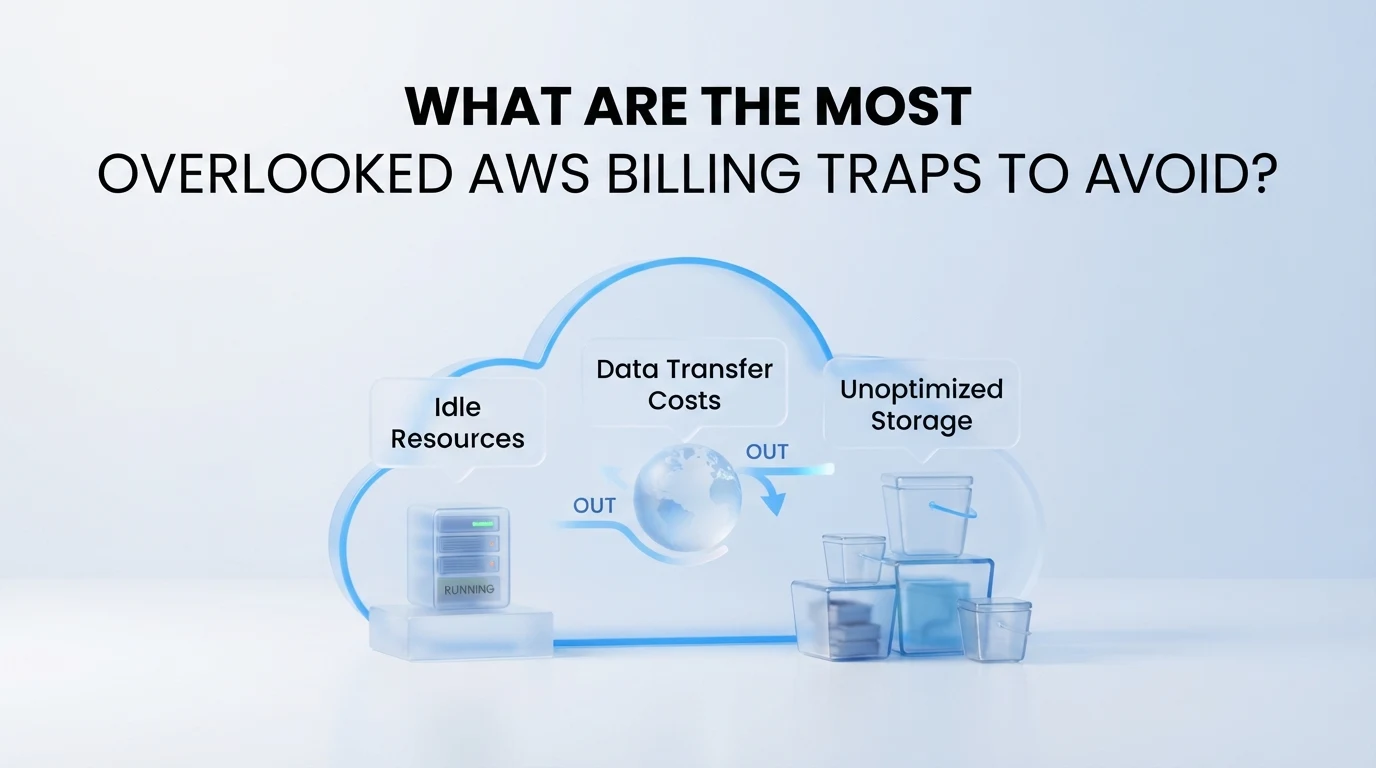
Think of self-managed Kubernetes like owning a physical apartment building. You must pay to heat empty hallways, hire security guards, fix leaking roofs, and cover the mortgage on unoccupied units. AWS Fargate operates like a boutique hotel. You rent only the exact rooms your guests need, exactly when they need them, without caring who maintains the roof or cleans the lobby.
Understanding your total kubernetes vs aws fargate migration cost requires stepping back from raw hourly VM rates. The real financial picture comes down to how each platform handles underlying compute, control planes, and day-to-day operations.
Breaking Down Infrastructure Overhead and the Kubernetes vs AWS Fargate Migration Cost
Kubernetes gives you complete architectural freedom. But that freedom comes with persistent background overhead. When running Kubernetes—whether through self-managed EC2 or Amazon EKS—you pay for three main operational drivers:
- Control Plane Fees: Amazon EKS charges $0.10 per hour per cluster. That equals roughly $73 every month just to keep the cluster API alive before running a single container.
- Worker Node Bin-Packing Waste: Standard Kubernetes runs on Virtual Machines (EC2 instances). If your pods only use 60% of an EC2 node's CPU and RAM, you still pay 100% of that VM's price. Spreading workloads across multiple nodes leaves fragments of unused compute.
- Tooling and Maintenance Staffing: Managing cluster upgrades, ingress controllers, auto-scalers, and security patches takes serious engineering time. As one practitioner highlighted during enterprise architects discussing build vs buy trade-offs, maintenance, staffing, integration complexity, and time-to-insight quickly become the dominant long-term cost drivers.
To control this waste, teams often adopt cost observability platforms like Kubecost open-source cost tracking engine. Yet monitoring software adds another item to your monthly bill.
Evaluating Fargate Serverless Compute Against Traditional Orchestrators
AWS Fargate replaces worker node management entirely. Instead of configuring EC2 instances, you specify the exact vCPU and RAM your container task requires. AWS provisions the underlying hardware automatically. You pay strictly for the precise duration your task runs, measured down to the second.
When engineering teams weigh Fargate against Kubernetes or Amazon ECS, four common architectural questions dictate the financial decision:
What are the key differences between Kubernetes, ECS, and Fargate?
Kubernetes is an open-source, highly customizable orchestrator capable of running anywhere. Amazon ECS (Elastic Container Service) is AWS's simplified, proprietary container orchestrator. Fargate isn't a separate orchestrator. It's a serverless compute engine that powers containers running on either ECS or EKS. Fargate removes the server layer so you don't manage nodes.
Which is cheaper, EKS or ECS?
Amazon ECS is cheaper upfront because its control plane is completely free. Amazon EKS costs $73 per month for every cluster control plane. For smaller setups or development environments, ECS saves money immediately on control plane overhead according to Wring's breakdown of container orchestrator pricing.
Is Fargate more expensive than ECS?
Fargate costs roughly 30% to 50% more per raw unit of compute compared to plain EC2 instances running under ECS. However, Fargate eliminates idle node waste. If your traditional EC2 nodes sit at 40% utilization, Fargate often ends up cheaper overall because you don't pay for idle capacity.
What are the disadvantages of Fargate?
Fargate limits low-level kernel access, prevents daemon sets from running on nodes, and takes slightly longer to spin up new tasks (cold starts) compared to pre-provisioned EC2 capacity. Large steady-state workloads running continuously at high utilization can also become far more expensive on Fargate than on reserved EC2 instances.
To see how container platform choices impact real-world infrastructure decisions, the video above outlines tech stack architecture choices between ECS, Fargate, and Kubernetes for high-volume enterprise systems.
Shift your financial focus from raw compute unit prices to actual engineering time spent maintaining cluster health.
Pricing Models Compared: EKS EC2 Instances vs Fargate vCPU Rates
Understanding the financial side of container orchestration often trips up engineering teams. A common misconception on cloud developer community threads is that running AWS Fargate requires paying for underlying EC2 virtual machines alongside pod usage. In reality, Fargate removes the EC2 layer entirely. You pay exclusively for the exact vCPU and memory allocated to your running pods. However, both deployment models require the standard Amazon EKS control plane fee of $0.10 per hour, which equals roughly $73 per month per cluster.
Think of EC2 instances like renting an entire apartment complex. You pay for every room regardless of whether a tenant lives there. Fargate functions like booking individual hotel rooms by the minute. You only pay for occupied space, but the rate per square foot is higher.
Analyzing the Kubernetes vs AWS Fargate Migration Cost Breakdown
Evaluating raw pricing metrics requires looking beyond sticker prices. On paper, Fargate vCPU and memory rates look slightly more expensive than baseline EC2 instances. Fargate charges per-second billing with a one-minute minimum. In the US East region, Fargate costs approximately $0.04048 per vCPU-hour and $0.004445 per GB-hour. Conversely, an On-Demand m6i.large EC2 instance (2 vCPUs, 8 GB RAM) costs around $0.096 per hour. That breaks down to $0.048 per vCPU-hour including memory.
The real financial difference lies in node utilization efficiency. Most self-managed Kubernetes clusters on EC2 suffer from low compute utilization. Teams routinely leave 30% to 50% of node capacity empty to buffer against unexpected traffic spikes. When your EC2 nodes operate at only 50% capacity, your effective cost per used vCPU doubles. Fargate eliminates idle capacity waste because you do not pay for empty node buffer space.
| Cost Component | EKS on EC2 Worker Nodes | EKS on AWS Fargate |
|---|---|---|
| Control Plane Fee | $0.10/hour (~$73/month per cluster) | $0.10/hour (~$73/month per cluster) |
| Billing Model | Per-second for full EC2 instances (On-Demand or Reserved) | Per-second per pod (exact vCPU and Memory requested) |
| Average Resource Utilization | 50%–70% (requires manual bin-packing and scaling) | 100% efficient (no paying for unallocated node space) |
| Maximum Spot Discount | Up to 90% savings with EC2 Spot Instances | Up to 70% savings with Fargate Spot |
| DaemonSet Overhead | Runs once per node (shared across all pods) | Requires sidecar containers per pod (increases memory bill) |
| Persistent Storage Options | Supports EBS volumes, EFS, and local NVMe storage | Restricted to Amazon EFS (higher storage cost per GB) |
Why is EKS so expensive for steady-state workloads? It comes down to scale and architecture constraints. For large, continuous workloads with high resource utilization, EC2 nodes optimized with Savings Plans or Reserved Instances deliver lower raw compute expenses. EC2 Spot instances also offer discounts up to 90%, whereas Fargate Spot caps out near 70%. If your team actively manages cluster autoscaling using open-source tools like Karpenter, EC2 worker nodes yield superior cost efficiency.
"Fargate is very expensive for small amounts of CPU and RAM and moderately expensive for beefy runtime... but you save on devops operational overhead."
Is Fargate faster than EC2? Not when it comes to pod deployment speed. EC2 nodes with pre-pulled container images can spin up pods in seconds. Fargate must provision a dedicated microVM for every pod request, introducing a cold-start delay of 30 to 90 seconds. This startup lag can impact hyper-scaling web services during sudden traffic spikes.
Operational costs heavily influence your total kubernetes vs aws fargate migration cost. Fargate eliminates node management, kernel patching, and AMI updates. You trade higher per-unit infrastructure costs for lower engineering maintenance hours. However, architectural limitations can push Fargate costs up unexpectedly. Fargate does not support Kubernetes DaemonSets. Security monitoring agents, logging tools, and service meshes must run as sidecar containers inside every pod. These sidecars consume extra vCPU and memory, quickly multiplying your hourly usage charges.
Before committing to a migration path, benchmark your existing resource requests against actual consumption. You can model projected infrastructure spend using the official AWS Cloud Pricing Calculator. To track real-time container allocation and identify waste across hybrid setups, deployment teams frequently leverage Kubecost container cost management software.
How to Estimate Your Kubernetes vs AWS Fargate Migration Cost
Calculating Your Upfront Kubernetes vs AWS Fargate Migration Cost
Cloud migrations are rarely cheap. Calculating your total kubernetes vs aws fargate migration cost requires looking far beyond raw vCPU and RAM pricing. Most engineering teams focus on monthly cloud bills. However, team labor and workflow changes create the largest upfront expenses.
Switching your container orchestrator forces developers to rewrite deployment scripts. They must also reconfigure networking rules and retest security controls. To build an accurate budget, you must calculate four specific categories of migration expenses before writing any code.
Watch this comparison of EC2, ECS, and EKS compute platforms to understand the structural differences that drive migration overhead.
Step 1: Application Refactoring and Container Translation
Applications rarely move between platforms without code modifications. If you move from Kubernetes to Fargate, you must translate Helm charts and Kubernetes manifests into AWS ECS Task Definitions. This translation requires time and manual effort.
Architectural differences create extra work during this phase:
- DaemonSet Conversions: AWS Fargate does not support traditional Kubernetes DaemonSets. If you run node-level agents for logging or monitoring, you must refactor them into sidecar containers inside every task. This change increases per-pod memory usage.
- Storage Drivers: Kubernetes applications relying on specialized Persistent Volume Claims (PVCs) must be reconfigured to use Amazon EFS or standard S3 storage calls.
- Init Containers and Sidecars: Translating complex pod lifecycle hooks into Fargate task execution roles requires auditing every microservice.
Refactoring typically takes 8 to 16 engineering hours per microservice, depending on application complexity.
Step 2: Infrastructure-as-Code and CI/CD Pipeline Redesign
Your deployment pipelines cannot remain the same after shifting platforms. Moving off Kubernetes means replacing tools like ArgoCD or Flux with native cloud deployment pipelines or updated Terraform modules.
Engineers must replace Kubernetes custom resource definitions (CRDs) with cloud-native infrastructure code. If your team uses Terraform or OpenTofu, they must write entirely new module sets to manage ECS services, IAM roles, and target groups. Updating and testing build scripts for a standard deployment pipeline takes roughly 40 to 80 senior engineer hours.
You can baseline your current Kubernetes spending with the KubeCost infrastructure monitoring platform to see what your existing setup costs before changing pipeline code.
Step 3: Calculating Parallel Running and Testing Overhead
You cannot turn off your old platform overnight. Dual-running costs occur when you operate both environments during testing and staging. This overlap usually lasts between two weeks and two months.
"The main cost driver taken into account are the people needed to manage clusters. eg. a major service migrated from EKS to ECS, and the same team handled twice the product volume afterward."
— Community discussion on Reddit thread on EKS to managed service shifts
During dual-running, you pay double for compute resources. You also incur data transfer fees while syncing databases and routing partial traffic across platforms. Plan to budget 150% of your current monthly cloud spending for the entire cutover window.
Formulating Your One-Time Migration Budget
To project your project costs, aggregate your expected labor hours alongside temporary infrastructure overhead. The table below estimates average expenses for migrating a medium-sized environment containing 30 microservices.
| Expense Category | Estimated Effort / Metric | Average Cost (USD) |
|---|---|---|
| Application Refactoring | 30 services × 12 hours ($100/hr labor) | $36,000 |
| CI/CD & IaC Rewrite | 60 Senior DevOps hours ($120/hr labor) | $7,200 |
| Dual-Running Cloud Compute | 1 Month parallel production testing | $4,500 |
| Security & Compliance Audit | IAM policies & networking validation | $5,000 |
| Total Estimated Project Cost | One-Time Expense | $52,700 |
Answering Key Financial Questions
Engineers and financial managers often ask specific questions when analyzing container platform migrations:
How can I calculate the cost of Fargate?
AWS charges for Fargate based on the exact vCPU and memory allocated to your tasks per second. You calculate monthly bills by multiplying reserved CPU cores and RAM by their hourly rates in your region. You can estimate your environment parameters directly on the official AWS compute calculator portal.
Why are people moving away from Kubernetes?
Teams leave Kubernetes when operational overhead outweighs architectural benefits. Managing cluster upgrades, control planes, and ingress plugins requires dedicated DevOps talent. Small to mid-sized teams often move to serverless container platforms to eliminate cluster maintenance toil.
How much does Kubernetes cost on AWS?
Amazon EKS charges a flat fee of $0.10 per hour per cluster, which equals about $72 monthly per control plane. On top of that fee, you pay for compute instances, worker nodes, load balancers, and persistent storage attached to your cluster.
How much does AWS Fargate cost?
Fargate pricing varies by AWS region. In standard US regions, you pay roughly $0.04048 per vCPU hour and $0.004445 per GB of RAM hour. Because there is no base cluster control plane fee, small workloads run much cheaper on Fargate than on dedicated Kubernetes clusters.
Understanding these variables gives you a complete operational framework. Factoring engineering time alongside compute pricing ensures your final kubernetes vs aws fargate migration cost calculation accurately reflects reality.
Why Do Hidden Expenses Surprise Teams During Container Platform Migrations?
Calculators lie. They give you clean, predictable numbers based on raw vCPU and memory. Real cloud migrations rarely stay inside those neat estimates. Engineering teams often discover that their total infrastructure bill ends up two to four times higher than expected after moving off legacy servers. As developers pointed out while discussing cloud cost blowouts on Reddit, modern platforms frequently suffer from overly complicated pricing models with hidden fees tucked around every corner.
Unpacking Surprises in Kubernetes vs AWS Fargate Migration Cost Models
Data movement kills budgets quietly. Cloud providers charge money whenever data moves between Availability Zones (AZs). Think of AZs as separate islands connected by toll bridges. If your microservices talk to each other across zone boundaries, you pay a tax on every gigabyte sent and received.
When you run self-managed Kubernetes or Amazon EKS on EC2, you can configure local node topology rules. This setup keeps container traffic inside the same availability zone. What about serverless container environments? What is AWS Fargate? It's a serverless compute engine for ECS and EKS that abstracts away physical nodes completely. Because you don't control pod placement across physical hardware, Fargate tasks often talk across zone boundaries without your knowledge. Those fractional pennies per gigabyte compound quickly into thousands of dollars on heavy data pipelines.
Observability tools present another massive post-migration expense. You can't fix what you can't see, but seeing inside containers costs real money. In standard Kubernetes vs ECS deployments using virtual machines, you run a single monitoring agent (like Prometheus or Datadog) per node. That agent collects metrics from every container on the host at no extra per-pod license fee.
Fargate changes this math completely. Because Fargate hides the underlying server, you can't run host-level monitoring agents. You must insert monitoring agents as "sidecar" containers directly inside every application pod.
"Our data pipeline migration stalled because monitoring sidecars ate 30% of our allocated memory per task. We were paying for compute we weren't even using for business logic."
If you use commercial platforms like Datadog or New Relic, sidecar deployments can trigger massive billing spikes. Running hundreds of short-lived Fargate tasks with sidecars multiplies your ingest fees. A recent real-world container compute cost analysis showed that heavy monitoring sidecars on Fargate can easily erase any savings gained by eliminating EC2 instance management.
What are the main disadvantages of Fargate?
Fargate trades operational control for convenience. You cannot use custom Linux kernels, attach direct host storage, or use GPU acceleration economically. You also pay for full vCPU and RAM blocks even if your container only uses a fraction of those resources.
Why is EKS so expensive compared to standard infrastructure?
Amazon EKS charges a flat $0.10 per hour ($72 per month) per control plane cluster just to exist. That sounds small. However, if you spin up multiple isolated environments for development, staging, QA, and production, control plane management fees accumulate before you launch a single application container.
Which is cheaper, EKS or ECS?
AWS ECS carries no cluster management fee, while EKS costs $72 per month per cluster. When comparing ECS with Fargate vs EC2 instances, ECS is usually cheaper upfront for small footprints. However, evaluating Kubernetes vs ECS at scale shows EKS on EC2 becomes much cheaper when using tightly packed reserved instances.
People cost more than servers. Moving between architectures forces your team to unlearn old habits. That transition period slows everything down.
If your team migrates from native Kubernetes to AWS Fargate vs ECS setups, they must rewrite Helm charts into proprietary AWS Task Definitions. That work takes weeks. It halts feature delivery. Moving from Fargate vs EKS back to raw Kubernetes forces engineers to master complex Role-Based Access Control (RBAC), network policies, and ingress controllers.
Security policies add technical friction. Fargate requires granular AWS IAM roles for every execution task using IAM Roles for Service Accounts (IRSA). Kubernetes relies on internal service accounts and native manifest files. Rewriting these permissions isn't just a coding exercise. It requires security audits, compliance reviews, and frustrating trial-and-error debugging sessions that drive up your total kubernetes vs aws fargate migration cost.
Performance and Resource Allocation: Overhead vs Pay-Per-Use Efficiency
Analyzing Resource Overhead in Your Kubernetes vs AWS Fargate Migration Cost Strategy
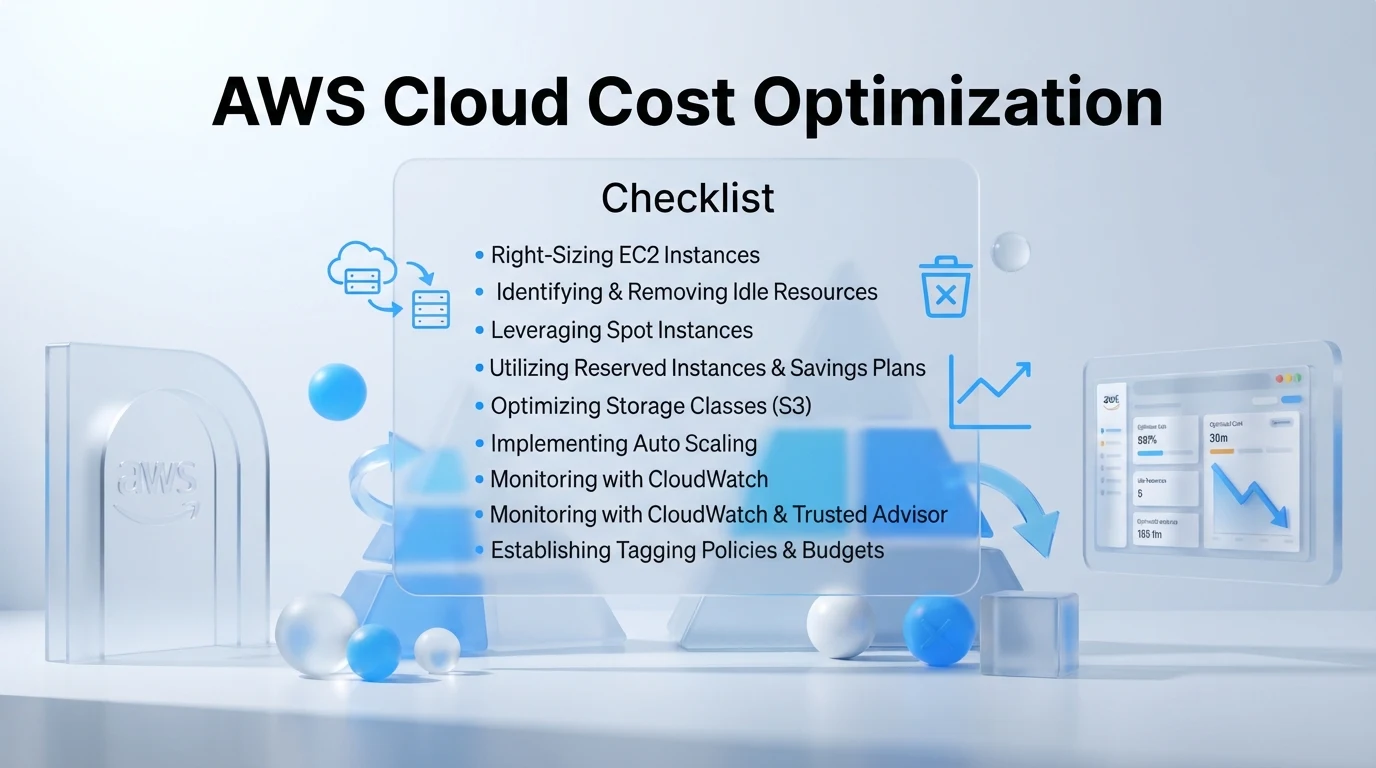
Raw compute pricing never tells the whole story. You can compare hourly node rates all day, but actual bills come down to how your platform handles unused compute power. In a self-managed Kubernetes cluster on Amazon EKS, you pay for full EC2 instances regardless of whether your pods use 10% or 90% of their CPU capacity. AWS Fargate shifts this dynamic completely by charging only for the specific vCPU and memory allocated to active tasks.
Engineering teams frequently over-provision Kubernetes workloads. They set high resource requests to keep apps from crashing when traffic spikes. This creates massive slack capacity—servers sitting idle just in case. Fargate eliminates that unused buffer by billing on a strict pay-per-use model. Yet, that flexibility comes with a trade-off: Fargate charges a higher unit price per vCPU hour.
Developers often ask on data engineering forums how to balance clean architecture with resource efficiency without accumulating massive cloud overhead. The answer lies in how tight your workload boundaries actually are.
Calculating your real kubernetes vs aws fargate migration cost requires looking closely at bin-packing efficiency. Think of bin-packing like loading luggage into car trunks. Kubernetes forces you to pay for the whole car even if the trunk is half empty. Fargate lets you pay per bag, but charges more for each item loaded.
| Resource Dimension | Kubernetes on EC2 (EKS / ECS) | AWS Fargate (Serverless) |
|---|---|---|
| Resource Allocation Unit | Full EC2 Instance (Shared by Pods) | Isolated Task (Fixed vCPU/RAM ratios) |
| Idle Capacity Cost | You pay for all unallocated node memory & CPU | Zero (Billing stops when task terminates) |
| Scaling Lag / Cold Starts | Instant pod startup on existing warm nodes | 20–60 second delay to provision new micro-VMs |
| System Overhead | DaemonSets, ingress controllers, agent pods (~10-15%) | Managed by AWS (Zero agent infrastructure footprint) |
Bursty workloads highlight the biggest operational differences between these platforms. When traffic surges, a Kubernetes cluster with pre-warmed nodes spins up extra container pods in milliseconds. AWS Fargate must provision an isolated execution environment for every new task. That process introduces cold start delays ranging from 15 seconds to over a minute. If your application handles real-time API requests, those extra seconds hurt user experience. If your job runs background data processing, cold starts barely matter. Fargate vs Lambda comparisons show Fargate handles long-running jobs better, while Lambda wins on instantaneous microsecond response times.
Task granularity also plays a massive role in cloud spend. AWS Fargate forces you to pick pre-set combinations of vCPU and RAM. If your application requires 1.2 vCPUs and 3.5 GB of RAM, you must step up to the 2 vCPU and 4 GB pricing tier. That forced rounding wastes money. On Kubernetes, you set custom pod requests down to single millicores and megabytes.
Application memory footprints magnify this difference. Heavily unoptimized runtimes struggle on tight serverless budgets. Developers participating in Java memory management discussions on Reddit often note how heavy garbage collection overhead pushes them toward Go or Rust. High native memory usage forces you into larger Fargate tiers. That extra memory padding inflates your monthly bill faster than running those same services on a shared EKS node.
Tools like CAST AI for EKS node autoscaling help eliminate Kubernetes over-provisioning by dynamically shrinking unused worker instances. Conversely, AWS Compute Optimizer reviews your Fargate task histories to recommend smaller configuration sizes.
What are the disadvantages of Fargate? Beyond cold start delays and coarse resource step sizes, Fargate blocks you from running privileged containers or custom DaemonSets. You cannot run low-level security agents or shared local disk caches directly on the host node.
Which is cheaper, Fargate or EC2? EC2 is significantly cheaper for predictable, steady-state workloads running at 70% utilization or higher. Fargate is cheaper for batch jobs, dev environments, and unpredictable workloads that idle for long stretches of time. Research from CloudOptimo container workload studies shows that Fargate reduces spend when managing idle cluster overhead costs more than Fargate's higher raw unit prices.
Why is Fargate better than EC2? Fargate removes the operational labor of patching operating systems, managing capacity groups, and tuning cluster autoscalers. Your team focuses entirely on containerized code rather than underlying server health. Evaluating AWS Fargate vs EKS or Kubernetes vs ECS comes down to trading granular infrastructure control for operational speed.
How much does AWS Fargate cost? Standard AWS Fargate pricing in US East regions runs roughly $0.04048 per vCPU hour and $0.004445 per GB hour. AWS Fargate Spot offers up to a 70% discount for fault-tolerant background workloads, narrowing the gap when comparing EKS vs ECS compute costs.
Which Platform Fits Your Budget: Scale, Workload Types, and Financial Thresholds
Every engineering organization hits a tipping point. You're trying to figure out if your infrastructure spend matches your business strategy. Serverless container platforms promise zero server management. Standard virtual machine pools offer massive bulk discounts. Deciding between them comes down to math, traffic patterns, and engineer time.
Evaluating Your Kubernetes vs AWS Fargate Migration Cost Across Real Workloads
Which is cheaper, Fargate or EC2? Direct unit rates make EC2 look like the clear winner every time. A standard t4g.medium instance costs significantly less per vCPU than raw Fargate compute. Raw node prices only tell half the story. Real-world clusters suffer from severe over-provisioning.
DevOps teams routinely battle internal resource bloat. In fact, Reddit discussions on cluster memory waste reveal that 40% to 50% of allocated memory sits completely idle in standard Kubernetes setups. You pay for reserved node capacity whether your pods use it or not. Fargate eliminates that specific waste. You pay only for the explicit vCPU and memory your pod requests. Small or highly bursty workloads often end up cheaper on Fargate simply because you don't keep idle servers warm.
Scale flips this equation rapidly. When your baseline footprint expands beyond 20 to 30 steady-state nodes, raw EC2 instance pricing beats serverless overhead. Which EC2 pricing model is best for predictable longterm workloads? Reserved Instances and Savings Plans deliver up to 72% discounts off standard On-Demand rates for steady workloads running on dedicated node pools. Fargate also supports Compute Savings Plans, but its starting base price remains higher.
Calculating your overall kubernetes vs aws fargate migration cost demands a clear look at your workload characteristics and cluster scale:
| Workload Attribute | Kubernetes on EC2 (EKS / Self-Managed) | AWS Fargate (EKS or ECS) |
|---|---|---|
| Scale Threshold | Cheaper at large scale (> 30 nodes) | Cheaper at small scale (< 15 nodes) |
| Traffic Pattern | Predictable baseline, flat usage curves | Spiky, highly bursty, intermittent batch jobs |
| Memory Utilization | Requires active cluster rightsizing tools | Zero idle server memory waste |
| DevOps Labor Cost | High (upgrades, node tuning, OS patches) | Low (fully serverless abstraction) |
DevOps Capacity and Platform Trade-Offs
Engineers aren't free. A senior platform engineer costs upwards of $180,000 per year. If two full-time engineers spend half their week maintaining worker node OS patches, ingress controllers, and cluster upgrades, that adds $180,000 in annual management overhead. That payroll expense often dwarfs small savings on your monthly AWS bill.
What is AWS Fargate solving here? It shifts worker node management directly to AWS. You don't manage underlying EC2 instances, AMI updates, or node autoscalers. For smaller engineering teams, moving from Kubernetes on EC2 to Fargate slashes infrastructure operational drag. Teams focus on product code instead of cluster maintenance. Tools like Cast AI or Kubecost help optimize EC2-backed Kubernetes clusters, but they require dedicated engineering attention to operate effectively.
According to a Sedai analysis on ECS and EKS pricing models, base Fargate rates start at roughly $0.04048 per vCPU-hour. While pricing per vCPU is identical across Amazon ECS and EKS on Fargate, running EKS adds a flat $0.10 per hour fee for the managed control plane. If you run dozens of micro-clusters, those control plane fees stack up fast.
Common Questions Regarding Container Spend
How much does AWS Fargate cost?
AWS Fargate charges based on the exact vCPU and memory resources your container requests per second. Baseline rates sit around $0.04048 per vCPU-hour and $0.004445 per GB-hour. You can reduce these costs significantly by applying an AWS guide on Compute Savings Plans for Fargate, which locks in discounts for one-year or three-year commitments.
What are the disadvantages of Fargate?
Fargate lacks support for privileged containers, direct host access, and custom kernel modules. DaemonSets don't work natively the way they do on standard Kubernetes nodes, making third-party monitoring agents harder to deploy. Startup latency (cold starts) can also take longer compared to launching a container on an existing, warm EC2 node.
Rule of Thumb: If your team runs fewer than 15 worker nodes with unpredictable traffic, Fargate usually saves money overall once payroll hours are factored in. Once your workload expands past 30 steady-state instances, investing in Kubernetes on EC2 yields massive financial savings.
Making the Long-Term Financial Call for Your Infrastructure Strategy
Deciding on infrastructure comes down to one core trade-off: do you want total control over your cluster, or do you want to move fast without managing servers? Kubernetes gives you full authority over every node, network rule, and container runtime. AWS Fargate strips away that administrative weight entirely. We've seen tech leaders agonize over raw cloud bills while ignoring the human cost of keeping complex clusters alive.
People often ask if AWS Fargate is deprecated or losing ground in modern cloud strategy. It isn't. Teams are increasingly embracing serverless containers because managing Kubernetes worker nodes creates endless operational toil. That toil explains why many organizations are actively stepping back from custom Kubernetes setups. When your engineers spend half their week upgrading node pools and debugging networking plugins, your payroll expenses skyrocket.
Ops labor isn't cheap. Understanding your true kubernetes vs aws fargate migration cost requires looking far beyond simple compute rates. What are the disadvantages of Fargate? You pay a premium per vCPU, and you give up low-level kernel tweaks, custom daemonsets, and ultra-specific hardware setups. But why is Fargate better than EC2 for so many growing companies? You don't have to patch operating systems, manage capacity planning, or pay platform engineers to babysit servers around the clock.
Calculating Your True Kubernetes vs AWS Fargate Migration Cost
A common mistake tech leaders make is treating cloud invoices as their only financial metric. As highlighted in Reddit discussions on moving from EKS to AWS managed services, the expense of hiring specialized DevOps talent far outweighs small markups on serverless compute. If your engineering group is small, paying Fargate's unit premium is almost always cheaper than hiring extra specialists to maintain upstream Kubernetes.
"Signals of financial competence come from matching your cloud architecture to your team's real capacity, not from over-engineering for scale you don't yet need."
Platforms like Amazon EKS running on EC2 instances allow you to use intelligent autoscaling tools like Karpenter to shrink hardware waste. That approach works wonders at massive scale. But if you lack the engineering bandwidth to tune those cluster tools, Fargate's automated setup delivers instant financial predictability. You pay only for the exact memory and CPU your running tasks consume.
To finalize your strategy, evaluate your workload needs against these operational paths:
- Choose AWS Fargate if: You run standard web applications or microservices, operate with a lean engineering team, and want zero server maintenance. Your primary focus is shipping product code without worrying about host nodes.
- Choose Kubernetes (EKS on EC2) if: You require multi-cloud flexibility, run massive steady-state workloads with deep EC2 Reserved Instance discounts, or need specialized daemonsets and GPU hardware access.
Take a realistic look at your engineering team before signing off on any platform shift. Factor in platform setup fees, team training, and hidden fees like control plane charges detailed in Rackspace Spot's analysis of EKS control plane overhead. Your long-term infrastructure financial health depends on balancing raw compute costs against developer velocity. Choose the model that keeps your team building software rather than wrestling with underlying servers.